>

Tuesday, January 10, 2017

Hon

Do you know the meaning of 'Hon' ?

It is a book.

So, what I want to tell you is which book that I have been used in this semester.


It is a very good book for beginner and they also have books for the upper level. 

Since, I just learned Japan language, just use this book.

Actually my lecturer want to use this book for the upcoming semester for student who wanted to continue in this subject but unexpectedly my university does not provided further study in japanese😭😭😭

Maybe I have to learn by myself😘

Sunday, January 8, 2017

FINAL PROJECT

For japanese class, we have final project that everyone must do it. Our final project is a presentation that should be about  japan. So, my group make a decision to present about japanese food...😍😍😍

I am so excited because I love food and that makes me more eager to present it in front of the class..

Here are my presentation..

Texture
Traditional Japanese cuisine consists of many different dishes of different textures.
1.      1.Crunchy texture

i)        Sunomono (cucumber salad) and konomono (preserved dish) are usually made with seaweed and raw vegetables like cucumbers.


2)      Soft texture
Food that are made by simmering vegetables such as nimono(simmered dish). A soft and jiggly textured food, like mochi. 


2)      Sticky
Textures that would be unpopular in the other countries such as sticky or slimy foods, are celebrated in Japan. This is why foods like natto (fermented soybeans) and some kinds of slimy seaweed are quite popular. They also popular with their sticky rice.


Terms of Japanese food texture
 1. Piripiri

Food that is especially flavourful like wasabi.


2. Furufuru
Soft and jiggly textured food, like mocha.


3. Wakuwaku
A jelly-like food
. Furufuru


 4. Punyupunyu
The texture of a gummy


5. Shikoshiko
Chewy, with elastic firmness


6. Kanten
Gelatinous


IE

Have you been invited by your Japanese friends to their houses (in Japan) before? If you have the chance to visit their house, you may find some unique things that you won't see elsewhere.

For example some Japanese houses may still have 畳 (tatami), thick Japanese straw mats that cover the floor, in some of the rooms.

In fact, the way how the Japanese measure the size of their rooms is by using counter of tatami mats, or 畳 (jou). (Note: same kanji but different pronunciation).

Rooms that were completely laid with tatami are known as 座敷 (zashiki).

Another thing you may find in a Japanese house will be the use of 布団 (futon), a traditional Japanese-style bedding, for sleeping. This padded mattress can be folded and stored in the 押入れ (oshiire) which is a closet, so that the room can be used for other purposes during the day.


KanjiHiragana or
Katakana
RomajiMeaning
1.いえieHouse
2.部屋へやheyaRoom
3.寝室しんしつshin shitsuBedroom
4.ベッドルームbeddo ru-muBedroom
5.ダイニングルームdainingu ru-muDining Room
6.居間いまimaLiving Room (Western Style)
7.リビングルームribingu ru-muLiving Room
8.台所だいどころdai dokoroKitchen
9.キッチンkicchinKitchen
10.台所用品だいどころようひんdai dokoro youhinKitchen Utensil / Kitchenware
11.車庫しゃこshakoGarage
12.戸棚とだなtodanaCupboard / Cabinet
13.蛇口じゃぐちjaguchiFaucet / Tap
14.流しながしnagashiKitchen Sink
15.洗面台せんめんだいsenmen daiWashbasin / Washstand
16.風呂場ふろばfurobaBathroom
17.バスルームbasu ru-muBathroom
18.お手洗いおてあらいotearaiToilet / Restroom / Lavatory
19.トイレtoireToilet / Restroom / Lavatory
20.玄関げんかんgenkanEntrance / Hallway / Front Door
21.にわniwaGarden / Yard
22.ベランダberandaBalcony
23.廊下ろうかroukaCorridor

Kazoku

KAZOKU
(FAMILY)


The Japanese word for family is kazoku. The way to say it phonetically, is "kah-zoh-koo".

If you wanted to ask someone how his or her family is doing, you'd ask "Go-kazoku wa dou desu ka".

If you wanted to ask someone how big his or her family is, just say Go-kazoku wa nan-nin imasu ka.

My family consist of 8 people, otousan, okaasan, oneesan, otouto and imouto.

We love each other and now, when I am writing this, I actually with my obaasan😁. I have a gap exam now, so I use the time to visit my obaasan before I start my last two paper...huhuuu😭😭😭

HAIKU

HAIKU

If we have poems, japanese people have haiku with them.

A traditional Japanese haiku is a three-line poem with seventeen syllables, written in a 5/7/5 syllable count. 

Often focusing on images from nature, haiku emphasizes simplicity, intensity, and directness of expression.


this is an example of haiku

If you look at it carefully, you will find that haiku is such a beautiful words and have a deep meaning in every words. I love it eventhough I did not fully understand the meaning.

It such a beautiful words with wonderful meaning.


MAINICHI

MAINICHI

Everyone have their own timetable, either at school, workplace or house. It is like you have to write it, instead you know what will you do that day. From one work to another work, it will continued everyday.

So, mainichi in japan means everyday. When you woke up in the morning, what will you do. Thats what we called mainichi. 

So, today I will show you mainichi ichi nichi.

6.00 okimasu (woke up)
7:00 shinbun o yomimasu (reading newspaper)
8:00 gakko ni ikimasu (going to school)
5:30 ichi ni kaerimasu (return home)
7:00 ban-gohan o tabemasu (dinner)
8:00 ofuro ni hairimasu (taking bath)
8:00 burogu ni kakimasu (writing blog)
12:30 nemasu (sleep)


This is mine😁😁

Sooo, how about you, try making it and show it to me😍😍😍

TABEMASU

JAPANESE FOOD


Have you ever like or eat japanese food?

Its food is notoriously nutritious, with a diet based around super-fresh, seasonal products.

Japanese cuisine has a large variety of dishes and regional specialties.

Here, we introduced many vocabulary such as lunch, dinner, beef, pepper, etc.
.


NUMBERS

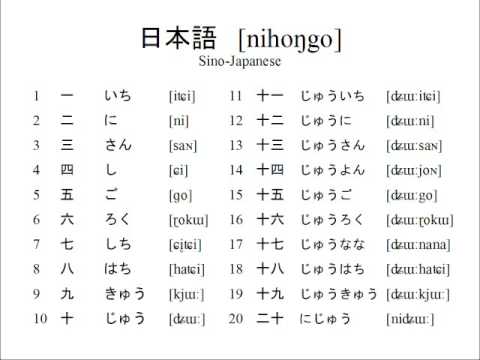
Today lets learn numbers in japanese. The system of Japanese numerals is the system of number names used in the Japanese language. The Japanese numerals in writing are entirely based on the Chinese numerals and the grouping of large numbers follow the Chinese tradition of grouping by 10,000.

Image result for numbers in japanese

OCCUPATION

Today we will covers the words and vocabulary related to Japanese occupations and jobs.


Image result for type jobs in japanese words

NAME

As the time goes, I learned on how to write my own name in Japanese.

My name is Nik, so my Dr. call me nikki as it can be write in japanese, Let me show you.

にっき. the writing is in hiragana。

Try to write your own name in hiragana using the words that I post before this... 

Good Luck!!😍😍😍

GREETING

In Japanese class we also learn how to greet people. Do you know how to say hello in Japanese? How about some other useful Japanese greetings?


Ohayō gozaimasu
Good morning

Konnichiwa
Hello / Good day

Konbanwa
Good evening
Oyasuminasai
Good night


Image result for Japanese greetings

WRITING

So, the first thing thing that I learned is Japanese writing, do you know that Japanese have different writing? I learn how to write, read and even sing! I learned hiragana, katakana and even kanji. Let me show you the writing💗💗


this is example of hiragana


this is example of katakana


kanji


So, are you interested now??

HELLO

Assalamualaikum and good afternoon everyone.⤗☺

The purpose I am making this blog is to share what have learn with all of you. So, actually I have been taking a Japanese class for this semester. It is so exciting to learn another language. i also take Mandarin class as i love Chinese drama so much.

So, for the time being I will share about what have I learned during Japanese class.